
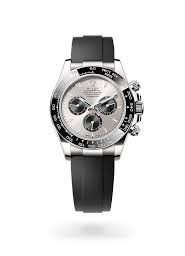
The replica watch scene has been buzzing lately, especially with VS Factory dropping a series of highly anticipated releases. Among them, the updated “weighted” version of the Rolex Daytona 126519 has generated significant chatter. It’s positioned as a direct competitor to frontrunners like Clean Factory, promising a more genuine feel through increased weight. But does it truly live up to the claims, and more importantly, is the rising cost of these super clones justified?
Let’s cut through the marketing speak. VS Factory isn’t the only player trying to add heft to replicas. The market is flooded with options from factories like GM, QF, and APS, each with its own method—and its own set of problems. Some use tungsten-copper alloys in the case, a technique that has backfired for some buyers, with reports of the metal plating peeling off over time. GM took a different approach with their Day-Date models, adding a metal cover over the movement to boost weight, which seems more reliable but often sacrifices on the finer details of finishing.
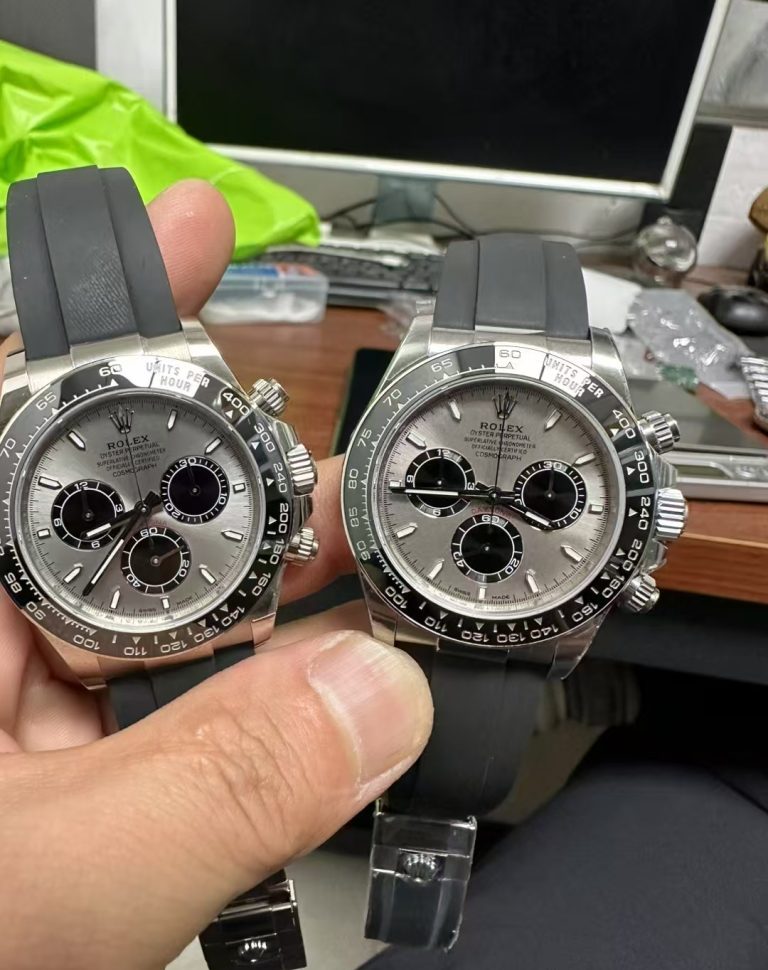 Then there’s QF, which allegedly increased the weight of their Daytona by simply using more metal in the bracelet links—a questionable method that doesn’t really replicate the genuine watch’s weight distribution and comes with a premium price tag. It’s a cutthroat market, and some of these pricing strategies are becoming hard to swallow. Paying more for a THB Day-Date than a top-tier Daytona from Clean or VS? That’s a tough sell.
So, where does the VS Factory Daytona V2 stand in all this? The promise is a watch that feels authentic on the wrist, and they’ve made progress. The case itself is impressively close. VS claims the case head matches the genuine article, but real-world measurements tell a slightly different story. The VS case head comes in around 96.2 grams, while a genuine model weighs about 99.3 grams. A 3-gram difference is virtually imperceptible on the wrist and is a minor point most enthusiasts can easily overlook.
The real weight discrepancy, a substantial 23.7 grams, lies in the Oysterflex-style rubber strap and clasp. The genuine Rolex clasp has a significant heft due to its internal metal components, while the replica’s clasp is made from stainless steel without additional weighting. This is a conscious choice by VS. They could have added a tungsten block inside the clasp, but that would have created a bulky, uncomfortable lump on the wrist. Prioritizing comfort over a perfect weight match on the bracelet is a trade-off many would agree with.
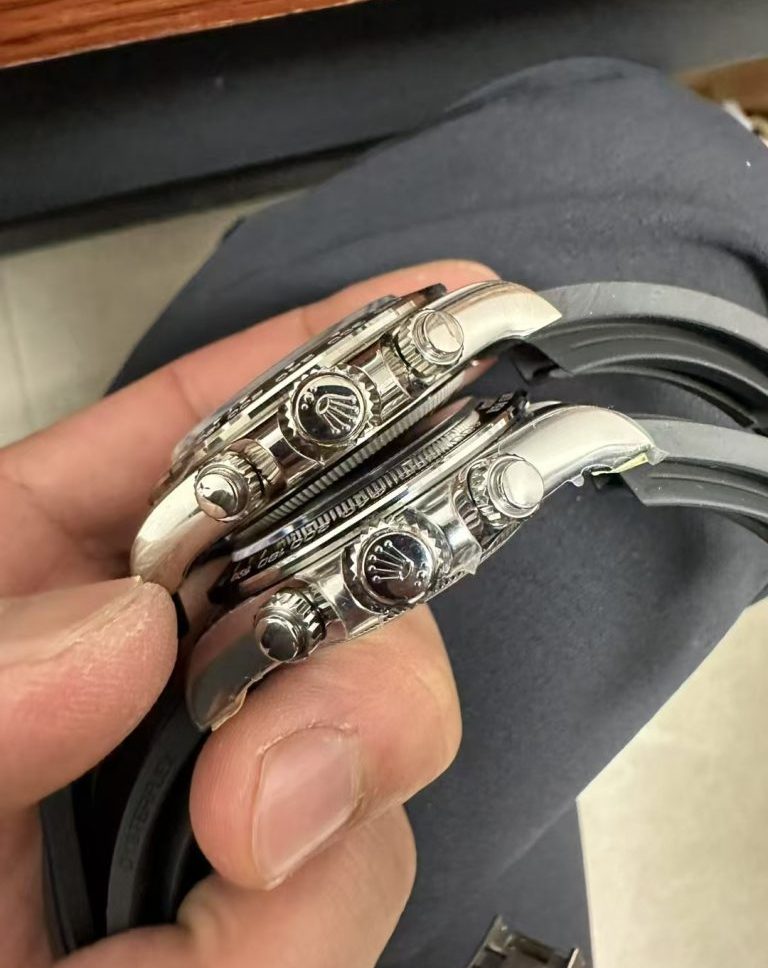
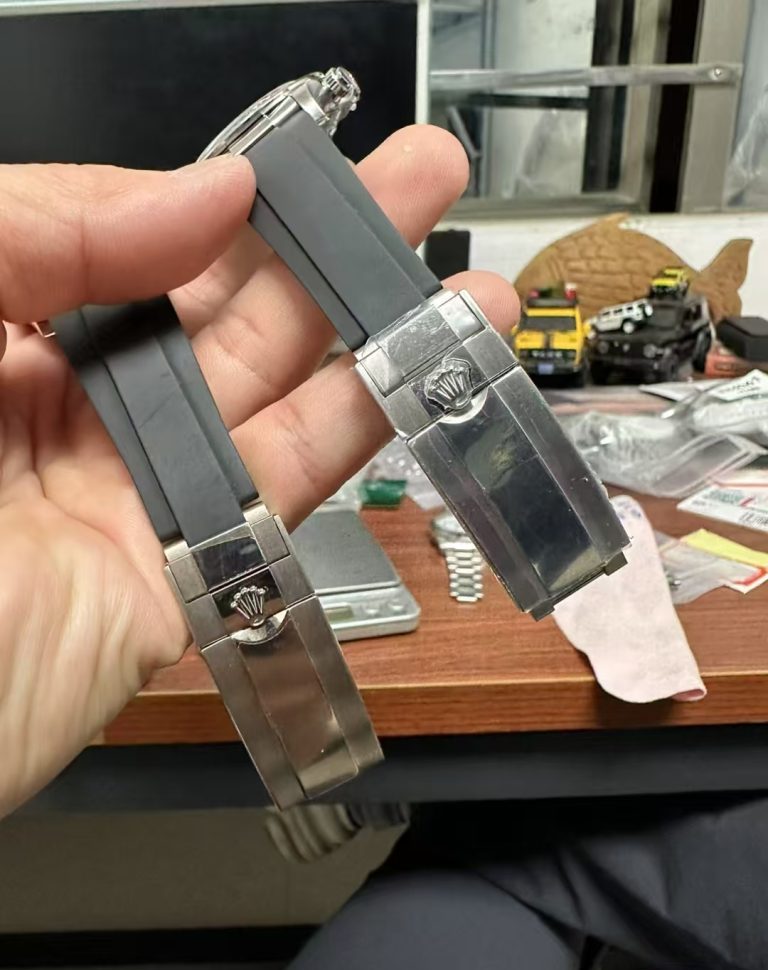 Beyond the weight, a closer look reveals other nuances. The engravings on the back of the lugs on the genuine watch are sharper and more refined. The sunburst effect on the genuine dial is also more pronounced under direct light. These are the subtle tells that separate a good replica from a great one.
The Bottom Line
The VS Factory Daytona 126519 V2 represents a significant step forward in the quest for the “feel” of a genuine watch. It wisely avoids the pitfalls of other factories by not using problematic alloys and by prioritizing wearability over a pointless weight increase in the clasp. While it isn’t a 1:1 perfect clone—the dial finishing and lug engravings show it’s not quite there—it gets the most important sensory experience right: the heft and balance of the watch head on the wrist.
 Are these ever-more-expensive super clones justifiable? For a product like this, which demonstrates clear engineering intent and a focus on the user experience, the answer leans toward yes. VS Factory seems to be investing in refinement rather than gimmicks, and that’s a trend worth watching.